Every year, tens of thousands of participants descend upon Nevada's Black Rock Desert to build Black Rock City—a temporary metropolis dedicated to art, self-expression, and community. But when the final embers die and the last art car drives away, the desert must be returned to its pristine state. This is the principle of Leave No Trace, and it's enforced by a remarkable tool: the MOOP Map. This crowdsourced, GPS-powered map tracks every piece of Matter Out Of Place (MOOP) left behind, turning cleanup into a collective, transparent effort.
The Genesis of the MOOP Map
Burning Man's environmental ethos dates back to its earliest days on Baker Beach in 1986. As the event grew, so did the challenge of cleaning up after 70,000+ people in a fragile desert ecosystem. The Burning Man Project's Playa Restoration team traditionally relied on physical grid sweeps and manual logs to identify problem areas. But in 2015, a group of tech-savvy burners proposed a better way: a real-time, location-based map that anyone could contribute to. The MOOP Map was born.
"The idea was simple but powerful—use the same technology that powers ride-sharing and delivery apps to let participants report where they found trash," says Sarah Chen, a lead developer on the project. "We wanted to remove the guesswork and give everyone a shared view of the mess." The map quickly evolved from a simple spreadsheet to a full-featured web app, now maintained by a dedicated volunteer team.
How the MOOP Map Works
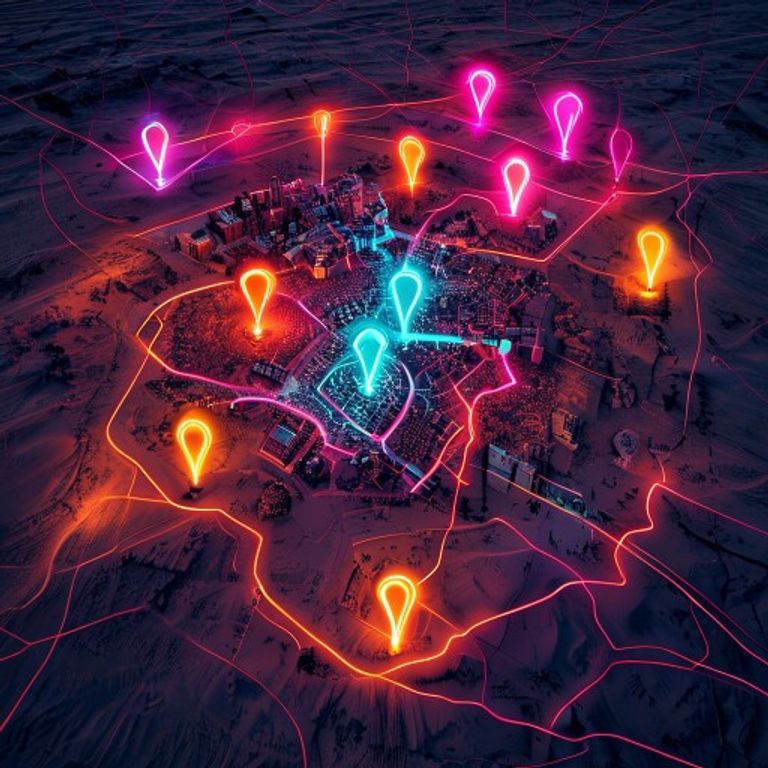
At its core, the MOOP Map is a crowdsourced data collection and visualization system. Participants use a mobile app (or the mobile web version) to drop pins at the exact location where they spot MOOP—anything from cigarette butts and bottle caps to larger items like tent stakes and lost costumes. The app records GPS coordinates, timestamps, and a photo. Users can categorize the type of MOOP (plastic, metal, organic, etc.) and add notes.
All data is stored locally on the device when off-grid (Playa has limited cell coverage), then synced to the cloud when the user reaches a Wi-Fi hotspot or cellular zone. The backend processes this data using Mapbox for rendering heatmaps and point clusters. A public dashboard shows real-time updates across the entire playa, color-coded by density. The result: a live, interactive map that reveals exactly where the community is failing—and succeeding—at Leave No Trace.
The Data Behind the Map
Over the past eight years, the MOOP Map has collected over 100,000 individual reports. Analysis by the Burning Man Project shows that nearly 95% of reported MOOP is collected by the participant who reported it, thanks to the map's gamified feedback loop. High-traffic areas like Center Camp, the Esplanade, and large sound camps consistently generate the most reports. In 2023, the map recorded a 28% reduction in MOOP density compared to 2019, a sign that the culture is changing.
"We found that the act of reporting itself encourages immediate cleanup," explains Dr. Mark Rivers, an environmental sociologist who studies the map's impact. "People see a piece of trash, mark it on the map, and then feel a social obligation to pick it up. It's a virtuous cycle." The data also helps the Playa Restoration team target their efforts—areas with high MOOP reports receive more volunteers during post-event cleanup.
Impact on Participant Behavior
The MOOP Map is more than a tool; it's a cultural intervention. By making the invisible visible, it transforms abstract environmental responsibility into a tangible, competitive game. Camps and neighborhoods that achieve "MOOP-free" status earn recognition and bragging rights. The map even includes a leaderboard showing which streets have the lowest MOOP counts, fostering friendly rivalry.
"I've seen neighbors confront each other over a single piece of glitter," laughs Tomás Rodriguez, a ten-year Burning Man veteran. "The map gives everyone the same information, so no one can hide. It shifts the blame from 'someone else' to 'us.'" This transparency has made Leave No Trace a collective obsession, with participants often stopping to pick up trash they spot near a pinned location, knowing it will be reflected on the map.
Technical Deep Dive: Stack, Accuracy, and Challenges
Building a system that works in one of the harshest environments on Earth is no small feat. The MOOP Map's tech stack includes OpenStreetMap for base map tiles, MapLibre GL for rendering, and a custom lightweight API written in Go. The mobile app (built with React Native) uses the device's GPS, which on the playa can be accurate to within 5–10 meters. To combat dust and heat, the app is designed to run in airplane mode for hours, caching up to 1,000 reports locally.
One of the biggest challenges is false positives—users sometimes mistake natural features (like dried mud or rocks) for trash. The team uses machine learning to filter out obvious non-MOOP images based on spectral analysis and size. Another issue is privacy: the map anonymizes user data, showing only aggregate locations. "We never want anyone to feel like they're being spied on," says Chen. "It's about the trash, not the person."
Industry Analysis: Lessons for Large-Scale Event Management
The success of Burning Man's MOOP Map has caught the attention of festival organizers worldwide. Coachella, Glastonbury, and Tomorrowland have all explored similar systems, but none have matched the granularity or cultural buy-in. "Burning Man's unique ethos of radical self-reliance and civic responsibility is hard to replicate," notes Emily Park, an event sustainability consultant. "But the core technology—offline-first, crowdsourced mapping—is very transferable." In fact, several disaster response groups have adapted the MOOP Map's open-source code for coordinating cleanup after wildfires.
The map also demonstrates how gamification and social accountability can drive pro-environmental behavior at scale. A 2022 study in the Journal of Sustainable Tourism found that events using similar feedback systems saw a 40% increase in waste sorting compliance. The MOOP Map goes further by closing the loop: report, clean, see the result.
Future Directions: AI and Automation
Looking ahead, the MOOP Map team is exploring computer vision to automatically detect MOOP from drone footage. "Imagine a drone flying over the playa, identifying litter in real time, and feeding that into the map," says Chen. Early prototypes can spot larger items like chairs and cooler lids, but small debris remains a challenge. Another frontier is predictive analytics: using historical data to forecast which camps will need extra cleanup crews.
For Burning Man itself, the long-term goal is to reduce MOOP to virtually zero—not just through better cleanup, but through prevention. The map already shows which materials are most commonly left behind (plastic packaging, glitter, and zip ties are the top three), and organizers are using that data to work with vendors on sustainable alternatives. "The map is no longer just a record; it's a diagnostic tool," concludes Dr. Rivers.
Conclusion: A Symbol of Trust
The MOOP Map is, at its heart, a social contract written in GPS coordinates. It proves that with the right tools, a community can hold itself accountable without top-down enforcement. It turns a chore into a shared mission, and in doing so, keeps Burning Man honest. As the event continues to grow, the map will evolve—but its core principle remains: we are all responsible for the world we temporarily inhabit.